
Monday
Stalking continues to be overlooked as a contributing factor in cases of homicide and suicide
In a detailed report published on the Monday, the Suzy Lamplugh Trust, on behalf of the National Stalking Consortium, warn that stalking risks preceding homicide or suicide continue to be missed and calls for clearer frameworks to identify stalking behaviours before they escalate to violence.
Alice’s case illustrates the dangers of escalation all too clearly, and fits closely with the ‘homicide timeline’ model developed between 2017 and 2019 by Professor Jane Monckton Smith. Alice’s is one of several case studies included in the report. Despite the risks highlighted in Alice’s case 10 years ago, there have been other tragic cases since, including the murder of Claire Chick in January 2025 by her ex-partner, as well as Gracie Spinks who was murdered by a colleague in 2021.
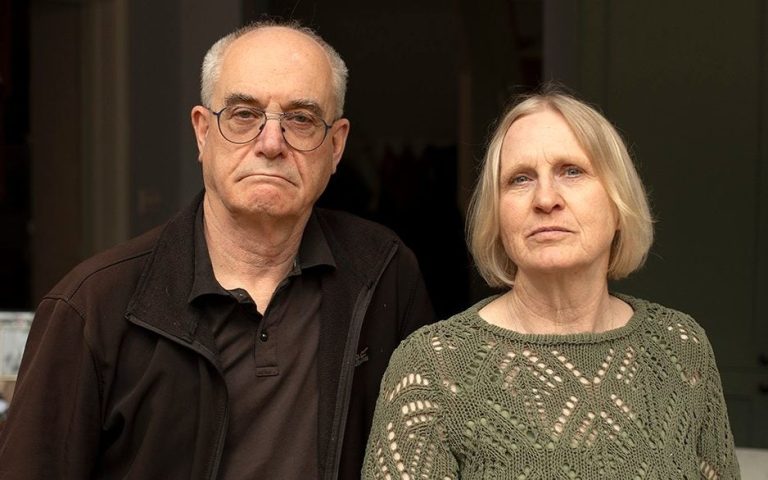
Alice’s father Clive is quoted as saying:
“Ten years ago, my daughter Alice was stalked relentlessly by an ex-boyfriend after she ended their relationship. Over the next three months, the stalking rapidly escalated. He then broke into her flat and killed her. Could her death have been prevented if the right measures had been taken during those three months? I absolutely believe so.
This keeps happening and we need to stop it. We urgently need practitioners across criminal justice and beyond to better understand the risks of stalking and the very real danger of escalation all the way to homicide.
We need police and healthcare professionals to better trained to act appropriately when confronted with stalking cases and we need ongoing research that informs and improves best practice. Until this happens, we will continue to see lives lost unnecessarily, as Alice’s was.”
Tuesday
“Stalking is either a life sentence or a death sentence”
Today, Clive gave a presentation at the Suzy Lamplugh Trust’s virtual conference entitled “It never goes away: a personal view on impact and prevention”. During the talk he quoted the poignant sentence quoted in our title here, which comes from one of our Experts by Experience group.
You can see a clip of Clive’s talk on instagram or download a transcript here.
Later, Alice’s parents Sue and Clive delivered a webinar for the Magistrates’ Association on how magistrates can recognise stalking behaviours. It is crucial that magistrates have a better understanding of stalking and the risks involved, particularly of escalation to violence, in reaching their verdicts.
Wednesday
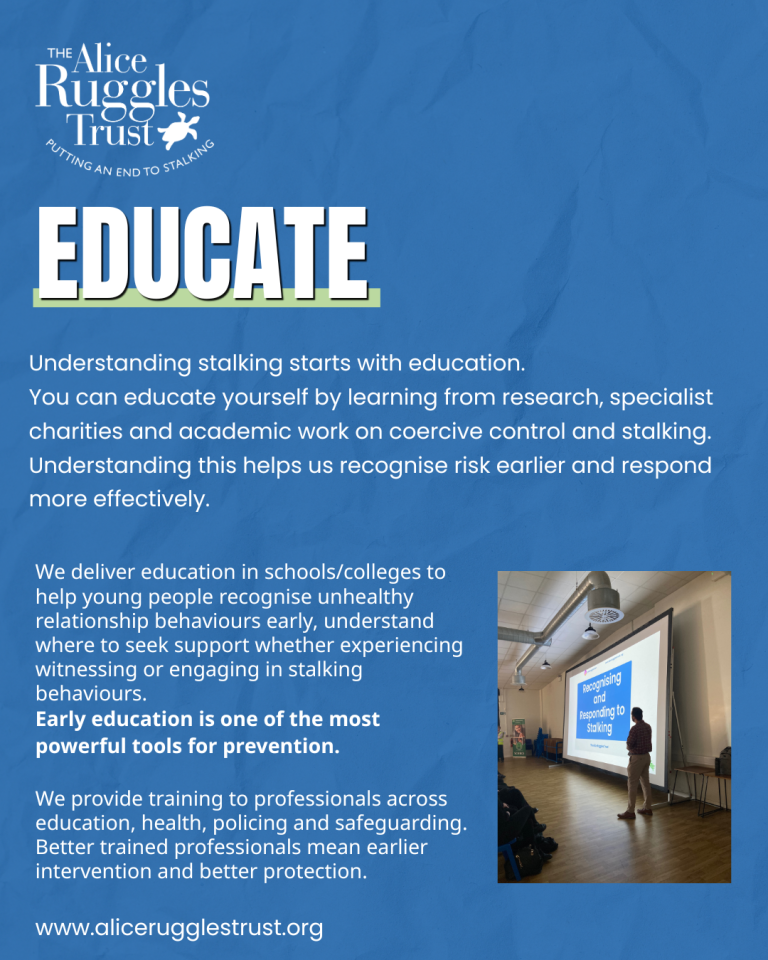
Meanwhile, our work in schools continues apace
Today Anna, our national assemblies co-ordinator, ran an awareness-raising session by for students at Salford College as part of their “Violence Against Women and Girls” Action Week.
Our volunteer Chloe, meanwhile, was delivering assemblies to no fewer than 500 students at a Manchester school. Thank you Chloe!
Thursday
“A mothers’ blog”
Alice’s mum Sue has begun a powerful day-by-day blog conveying her stories and reflections as she prepares for the Welsh coast-to-coast cycle ride which will be raising funds for the Trust during July.
Today she posted the 5th instalment entitled “A terrible night”.
You can also follow her posts on instagram, and please consider sponsoring her.
Friday
“Our daughter was murdered by a stalker”
The last day of NSAW 2026 was a very active one with many of our partners in the National Stalking Consortium contributing to media reports or giving interviews.
The Daily Telegraph published a “long read” by journalist Steve Boggan focusing on Clive and Sue’s ten-year journey since losing Alice.
Saturday
Our social media posts to end the week