
About our mission
Our mission is to foster generations of young people who understand stalking, the potential risks of stalking, and what they can do about it.
We focus on the long term.
We achieve this by
- Educating today’s young people about stalking.
- Upskilling professionals working with young people.
- Developing intervention programmes to prevent young people becoming stalkers.
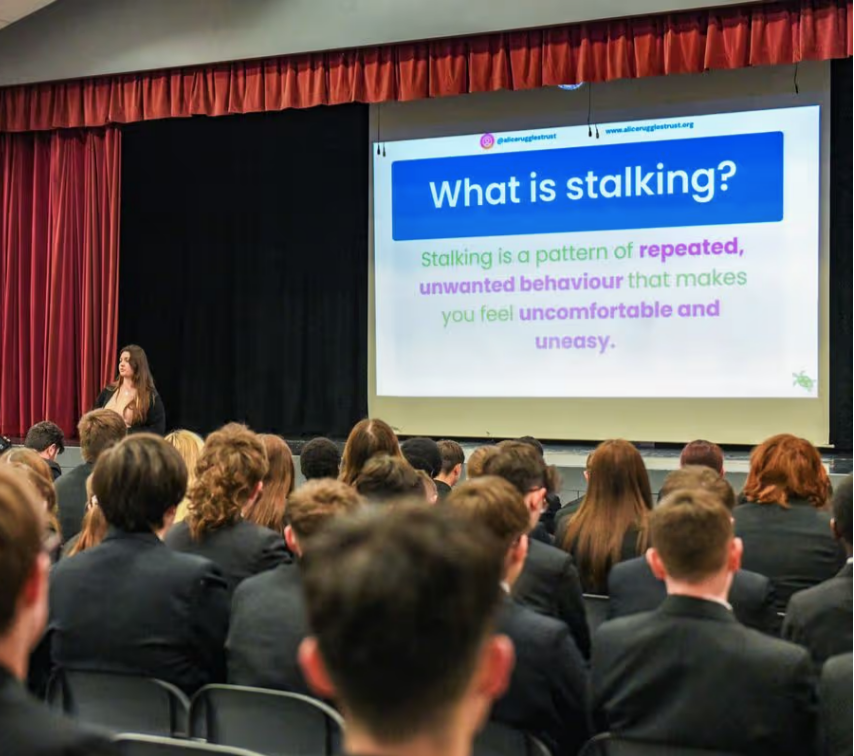
Our primary focus is to educate young people about stalking. We do this through school assemblies and PSHE lessons that explain about healthy and unhealthy relationships, how to recognise and respond to unwanted attention, how to help a friend, and how to manage one’s own negative behaviour.
We also upskill professionals in contact with young people to help them recognise and respond appropriately to stalking.
Added to this, we are actively involved in the development and delivery of programmes to prevent young people becoming stalkers in the first place, such as the EASI (Early Awareness Stalking Intervention) Project.
Beyond this core work, we deliver a range of services aimed at professionals who work, or might come into contact, with stalking victims or perpetrators, including training for criminal justice and social and healthcare professionals. We also provide information and advice for stalking victims and potential perpetrators, although we not offer advocacy.
Finally, we support academic research and run annual conferences that bring together practitioners and academics to promote dialogue and cooperation, and thereby to improve outcomes for stalking victims and perpetrators.
To help prevent what happened to Alice happening to others. To bring stalking to an end.
To foster generations of young people who understand stalking, the potential risks of stalking, and what they can do about it.
- Compassionate.
We have empathy for all people affected by stalking. We aim to understand their thoughts and feelings and to support them in seeking help. - Unprejudiced. We are non-judgemental in our attitudes towards both victims and perpetrators of stalking. We seek to understand thoughts and feelings whilst supporting healthy behaviours.
- Empirical.
We are driven by data and evidence in our work and strive to be an opinion former in relation to adolescent stalking. - Collaborative.
All our work is co-created with young people. We are committed to working in partnership to bring about societal change.
Our strategic priorities are that:
- All young people recognise stalking and have the confidence to seek support.
- All young people understand the connection between their own emotions, corresponding negative behaviours in relation to stalking, and impact on other people.
- Adults in contact with young people recognise stalking and know how they could respond appropriately to concerns about stalking.
You can download a copy of our full strategy below.